Last week I argued that supply chains will never standardize. Most people who wrote back agreed. Nobody defended the labels on their own dock.
Underneath the agreement was a second reaction, and it's the one worth answering: fine, so let AI read it all. Models can read anything now. Point one at the dock, the store backroom or the production line, and let it sort things out.
I understand the instinct. Most of us meet AI in a chat window. You type or talk, and something useful comes back. It's easy to picture the same thing happening on a receiving dock, in a store backroom or at a packing station.
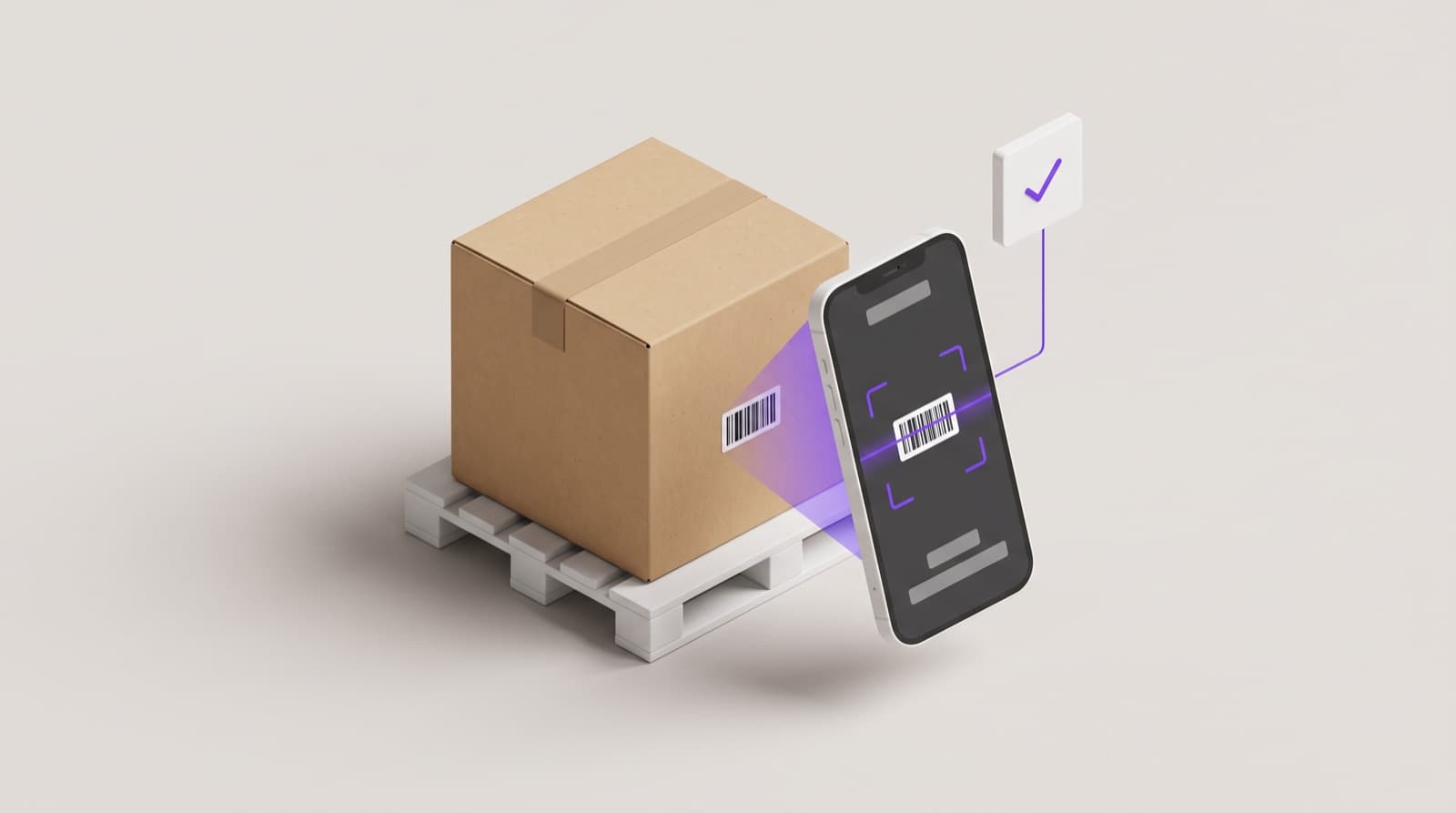
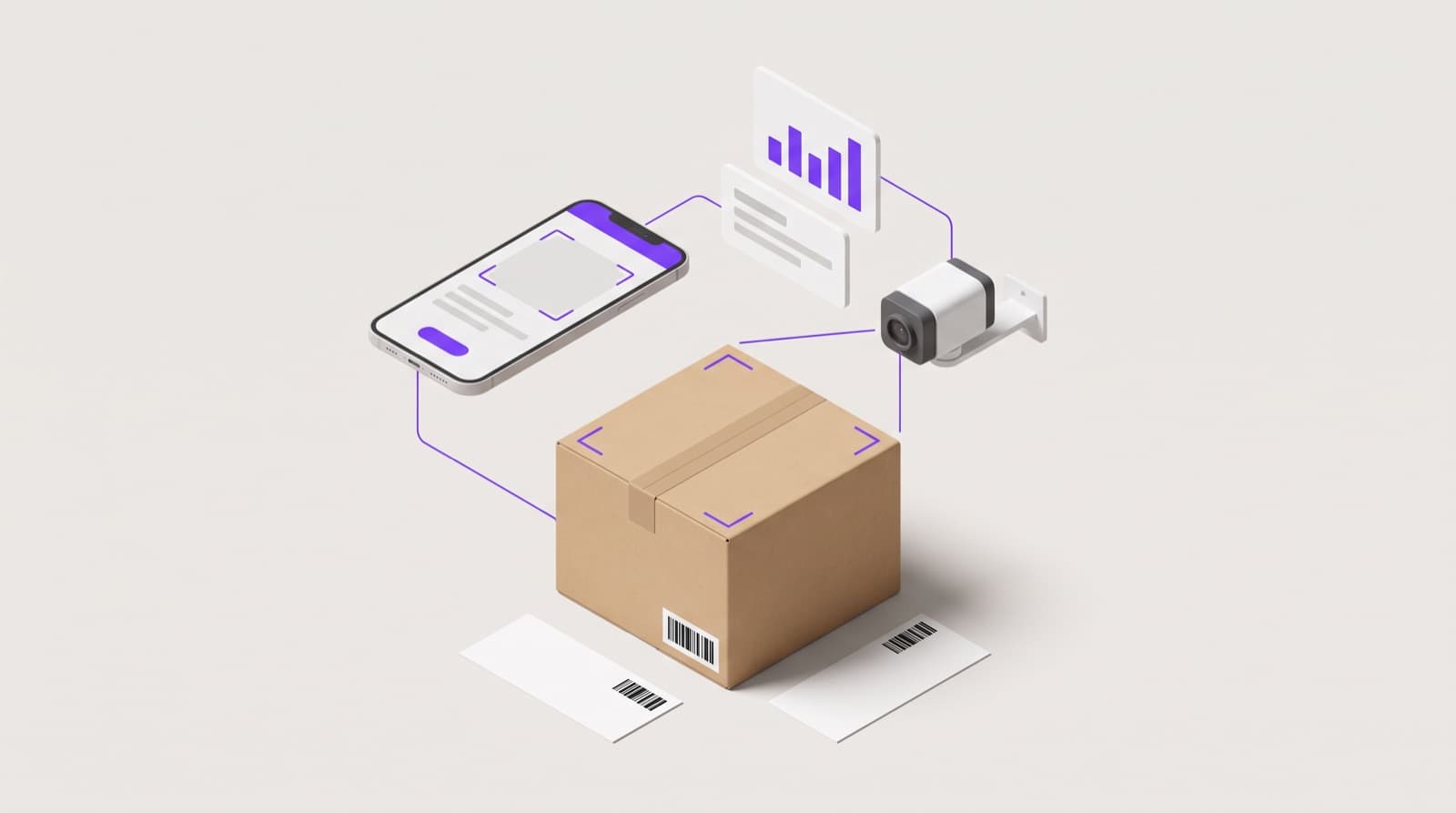
It doesn't. And the reason isn't that the models aren't smart enough. Work on the floor takes four things: see it, understand it, do it, verify it. Seeing happens on the devices frontline teams already carry, or on a fixed camera over a dock door or a line (what we call fixed vision). Understanding is a double job: the model has to read the messy thing in front of it and apply the context of the work, from this site's rules to what comes next, with nobody there to type the prompt. Then a person, a forklift, a conveyor or a robot does the physical work. And because models still get things wrong with confidence, the read and the work both get verified before anyone moves on. Today's models struggle with all four for one reason: where they learned, and what they never saw.
AI learned the digital world by reading it
Today's large language models (LLMs) are the AI behind the chat assistants most of us now use: models trained on enormous amounts of text to understand and write language. They got good at language and code because the digital world was written down. Billions of pages, books and forums, plus an enormous public library of code, were there to learn from. Coding agents then got a second boost: tools, tests, memory and checkpoints wrapped around the model, so it could act, check its own work and try again.
The AI world has a name for that wrapper. It's called the harness.
The physical world was never written down that way. How a pallet gets received at one DC lives in a binder, a spreadsheet, a home-grown system and the heads of three people on the second shift. Labels don't agree. Paper still travels with the goods. Most of the video that exists sits in security footage nobody watches.
There is no internet of the floor for a model to read. Today's models were built for the digital world. Physical operations need physical AI, and physical AI has to learn where the work happens. And physical AI isn't only robots and humanoids. Before any machine can do the work, AI has to see it, understand it and verify it, on the devices and fixed vision already on the floor. That's where physical AI starts.

Reading the floor is hard, and it's only the start
Hand any frontier model a bill of lading. It will pull out every field, in a few seconds or a few more. Impressive, but unverified, and only one sub-task in the real workflow. A clean document on a screen is also the simplest thing on the floor.
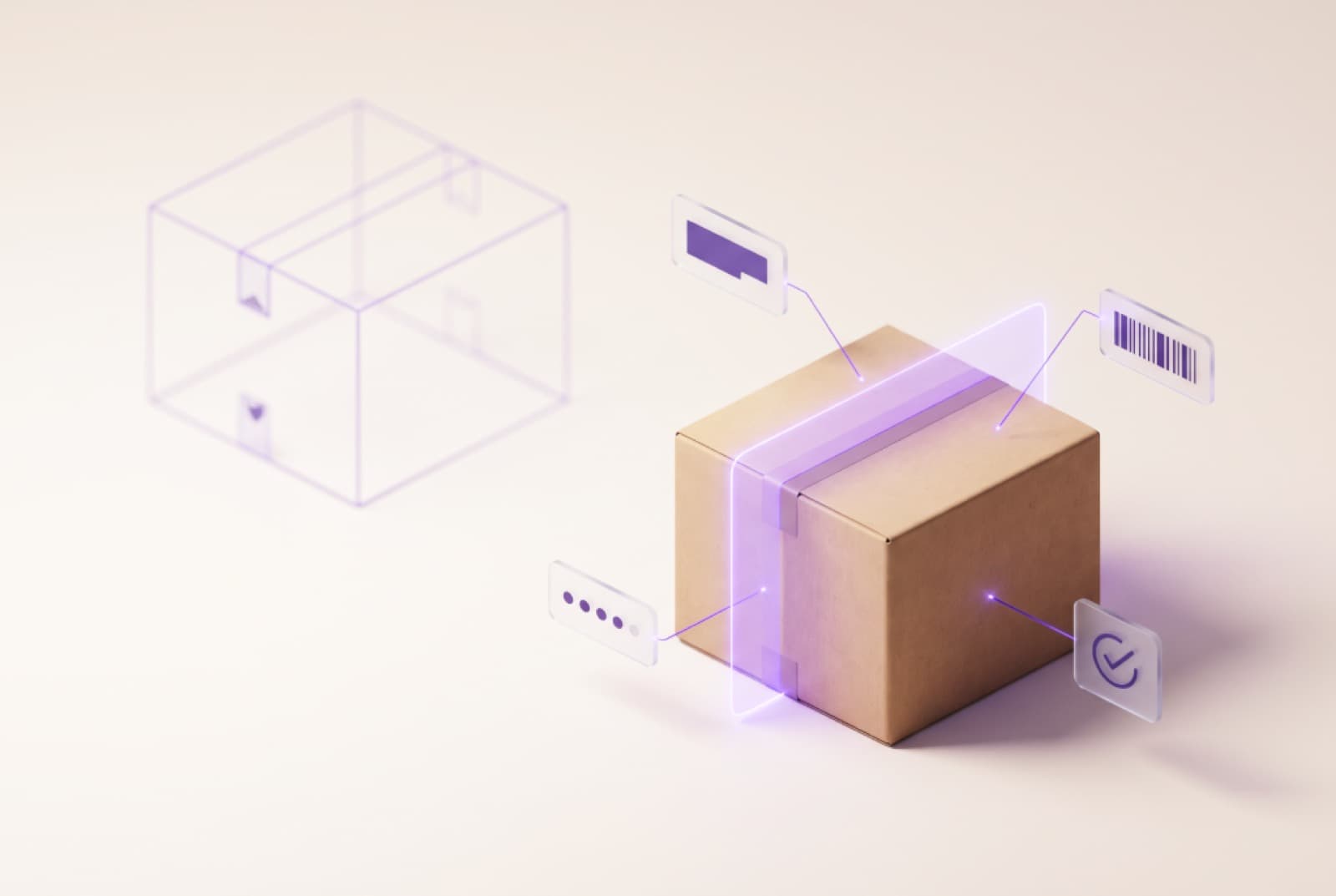
The floor is the physical world. On a single pallet, AI has to understand labels, barcodes, QR codes, printed and handwritten text, how many cartons are there, whether any are damaged and what the dimensions are. Often in poor light, at an angle, while the goods are moving.
Reading all of that takes a vision-language model (VLM): Vision AI that understands images and text together, like a label and the carton it's on. That's still hard, and it has to be fast. But even a fast, accurate read only counts in the context of the work: which task this is, what's expected, and what happens next. That context lives in the harness.
And even when every read is right, someone on the floor still has to decide:
- Does it match the purchase order, and which fields matter for that?
- What can be ignored?
- Is anything short, over or damaged, and who confirms it?
- Does this pallet get opened, put away, cross-docked or held?
- What happened the last time this supplier shipped like this?
- What goes back to the ERP or WMS, and what evidence do we keep?
A read on its own is what a barcode scanner has always done: read one code, look it up, done. Everything that makes the work right or wrong happens around the read. That's where tribal knowledge lives, and it's exactly what a model on its own doesn't have. It has never been on the floor.

The floor doesn't wait
Physical operations are mission-critical, and they run at volume. On a conveyor, a carton passes a reader in a moment. In a busy receiving bay, the next pallet is already at the door.
Can that line wait 15 seconds, or 30, for an LLM in the cloud to answer, with no guarantee it's an answer you'd trust? It can't. Physical AI has to respond at the speed of the work, on the device in someone's hand or on a server in the building. And it has to be reliable enough that a supervisor stops double-checking it.

What a harness does on the floor
If the model is the brain, the harness is everything that turns intelligence into a job done right. Think about how people learn a job. Nobody is born knowing how to receive a pallet. We learn the rules, get shown the steps, ask when we're unsure, and remember what went wrong last time.
Anyone who has asked an AI assistant to help plan a dinner has seen the difference. Without a harness, the AI replies in words and you do the steps. With one, it remembers your preferences, checks your calendar, looks things up, works in your apps and asks before it books.
On the floor, the harness is the execution layer. It has five parts:
- Site rules. The right procedure for every operator at every step: which shelf or bin, which pallets get opened, what gets cross-docked, what counts as close enough.
- Memory. What happened last time with this supplier, this lane, this dock. That memory is tribal knowledge, finally written down.
- Device and system connectors. Eyes where the work happens, on the devices frontline teams already carry and as fixed vision over a dock door or a conveyor, plus a line back to the ERP, WMS or home-grown system that needs to know. It watches the work, not the worker.
- Verification. Every step is checked against what's expected before the work moves on, with photo, time and place at every touch.
- A person on exceptions. Guardrails decide what gets accepted, what gets flagged and what a person confirms. "Two cartons short. Confirm?" The exceptions are where the money is.
Every step also captures data the physical world never had. The harness learns from it, and so does the operation.

What nine years on the floor taught us
At PackageX we learned this the hard way. Three lessons shaped what we've built.
1. One giant model isn't the right answer for mission-critical physical operations. We started in the cloud like everyone else. A giant model is good at a lot of things, but it's expensive to run at the volume of a busy floor, and it isn't fast. What worked was small, purpose-built VLMs. Each does one job extremely well, they work together, and they run on the device, or on a server on site that can run slightly larger VLMs. They're fast, accurate and predictable. A model with hundreds of billions of parameters is not how you keep up with a conveyor.
2. The floor runs on the devices it already has. Many handhelds on docks today have no dedicated AI hardware, such as a GPU, and Wi-Fi still drops between steel racking and trailers. Device makers are launching new models that can run AI, but most rugged business devices on the floor aren't ready yet. So the same models have to run on the device when it can and on site when it can't, without the team noticing the difference.
3. No two operations run the same work the same way. One customer photographs every pallet they open; another photographs only damage. One verifies every pick; another cares that the right goods reach the right door. Cycle counts run daily at one site, every 15 minutes at another, monthly at a third. So we stopped building one app and built workflows from blocks, configured to how each operation actually runs.
We've watched teams leave to build this themselves on a general-purpose model. Many came back within months. Building a model isn't the hard part. Knowing what to do with what it sees, exception after exception, is.
Models will change. The harness stays.
Models get cheaper and smarter every month, and that helps everyone building physical AI. Over time, models will be swapped. When a better one arrives, a good harness puts it to work. When the next model drops, a company with a harness gets better overnight. One without it starts over.
There is no substitute for the harness. It's what turns a smart model into work done right, fast enough for real-time decisions on a dock, a line or a store floor. And it does something no model release ever will: it captures verified data at every touch. Not scraped from the internet, but confirmed on the floor, with evidence. That's what real-time decisions, and the agents downstream, can trust.
Models come and go. Knowledge of how the floor really works gets built one exception at a time, and it stays. That's the moat.
Three questions to ask any AI vendor for your physical operations
- Does your Vision AI run on the device and on site, on the devices you already have? Handhelds, phones, tablets and fixed vision. Not only in the cloud, and fast enough for the floor.
- Do you offer just Vision AI, or complete, configurable workflows, with models trained on logistics and physical operations? A single read isn't the job. The work has to be guided from start to finish.
- Does it verify the work and keep the evidence, and how long has its harness been learning on real floors? Ground truth takes years of real deployments and exceptions, not a demo.
Exhibit 5 · Three questions to ask any AI vendor for your physical operations.
Founding Series #3. Earlier in the series: Who Verifies the Physical World? · Supply Chains Never Standardized
Next week: the map. If the harness is the layer that stays, where does it sit in the AI stack for physical operations, and why has nobody owned it?
Frequently asked questions
What is an AI harness?
Everything around an AI model that makes it reliable at a real job: the rules of the work, the tools that let it see and act, the checkpoints where a person confirms, and the memory and evidence it keeps. The model is the brain; the harness does the job.
What is physical AI?
AI that works where physical work happens, on factory lines, docks and store floors, alongside frontline teams, fixed vision and robots. It has to see the work, respond at the speed of the operation and check its results against the systems of record.
Why can’t a general-purpose AI model run receiving on its own?
It can read a document, but it doesn’t know the site’s rules, the exceptions, who should confirm what, or what happened last time. It also can’t wait in the cloud while the next carton arrives.
What should I ask an AI vendor for logistics operations?
Whether its Vision AI runs on the device or on site, whether it works on any device, whether it runs whole workflows or single scans, whether it was trained on supply chain work, and whether it gives you ground truth: guided execution, verification and evidence.